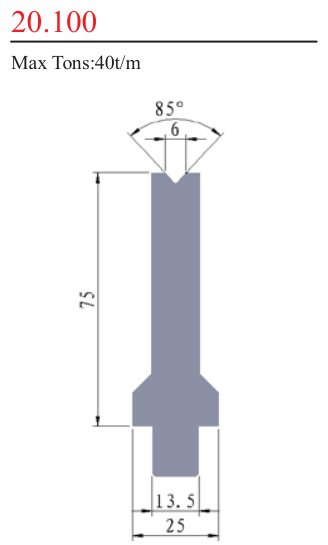
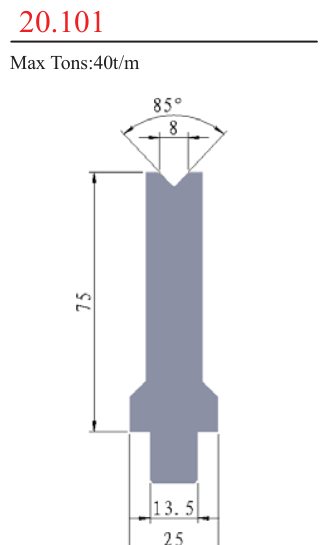
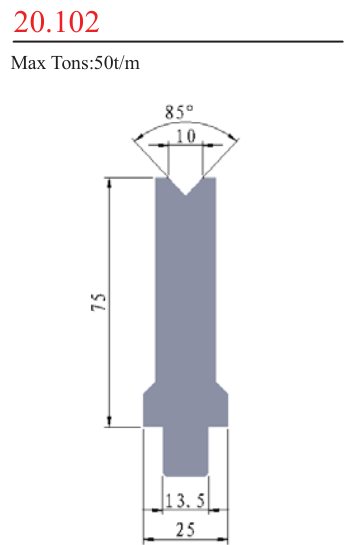
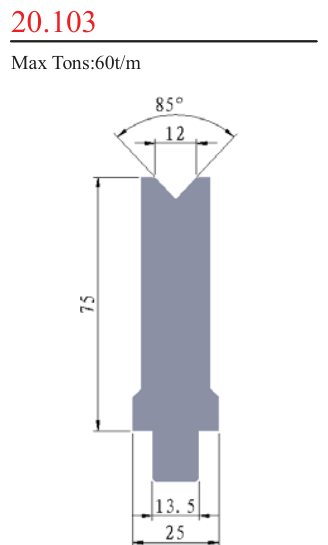
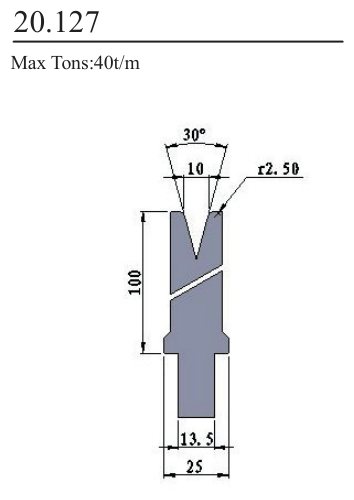
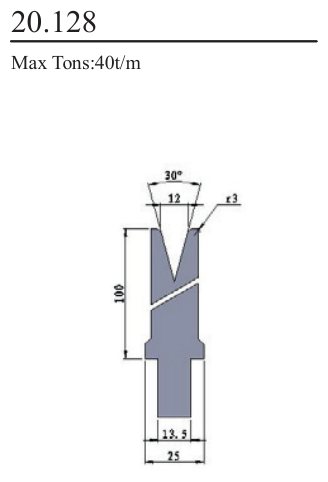
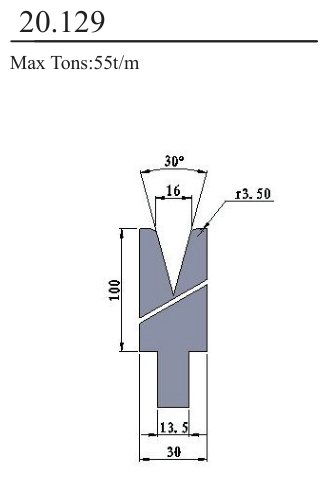
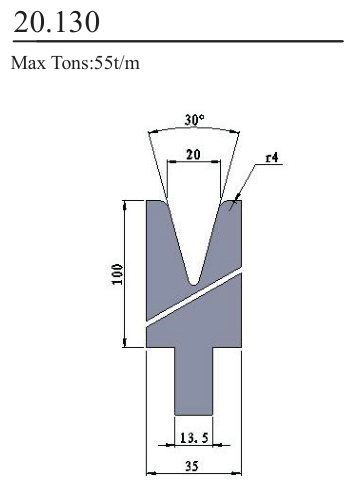
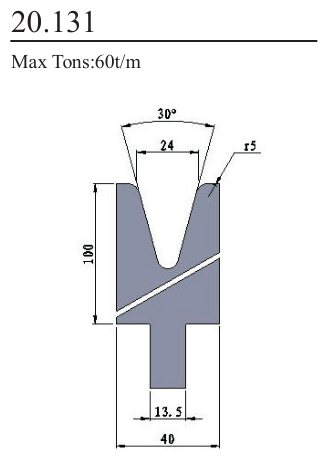
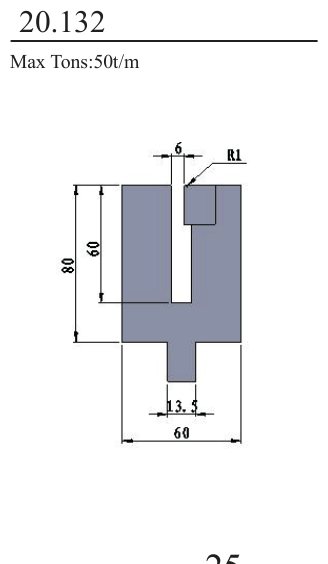
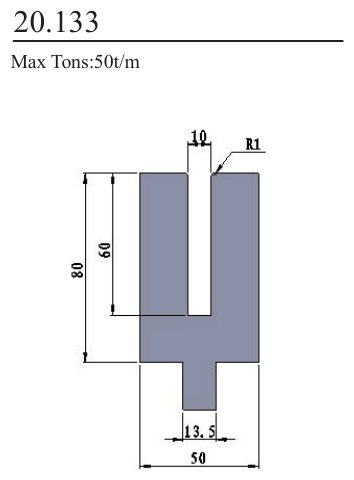
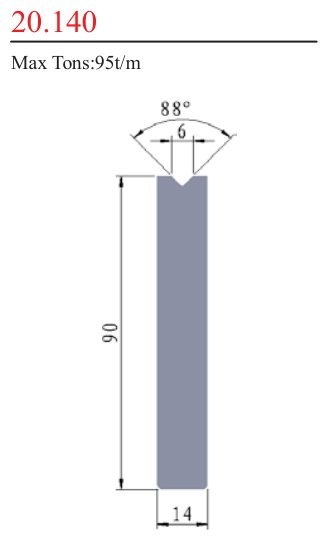
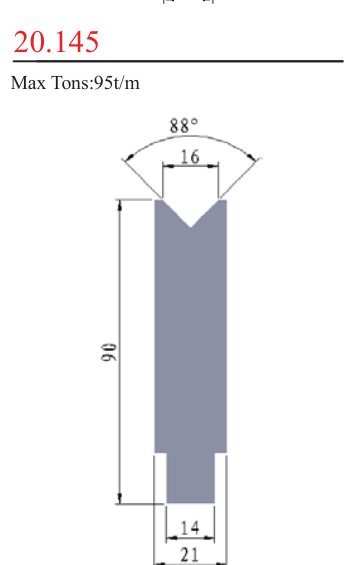
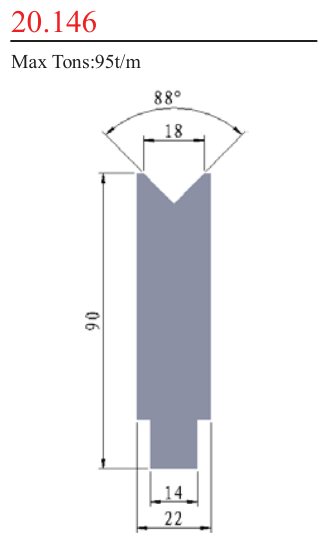
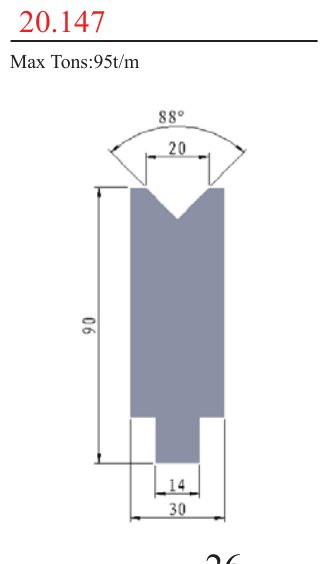
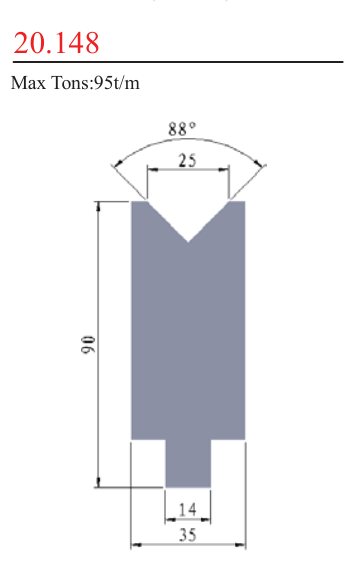
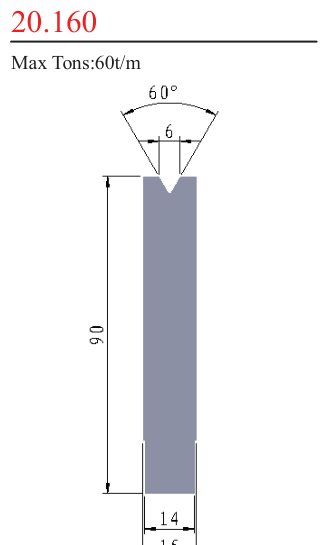
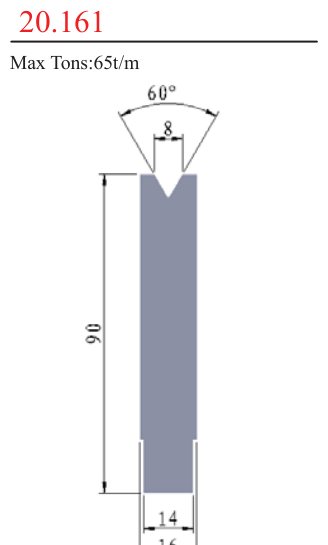
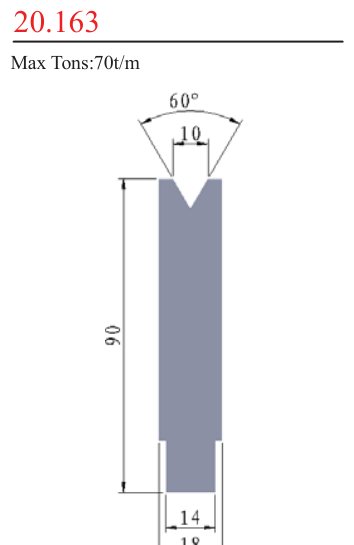
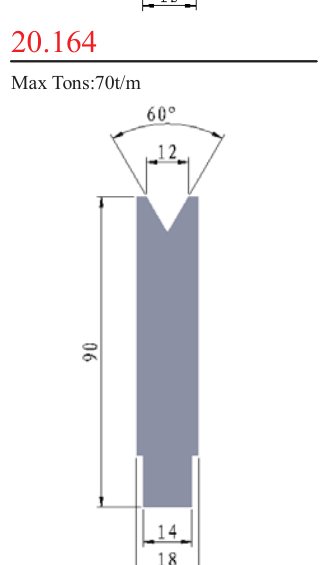
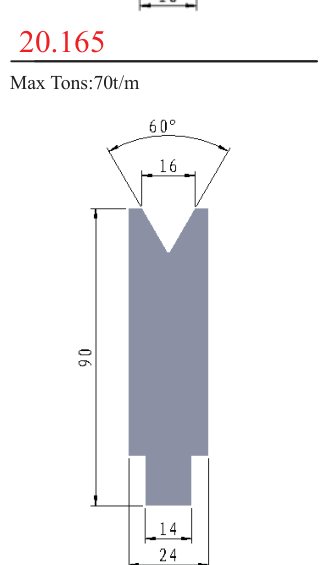
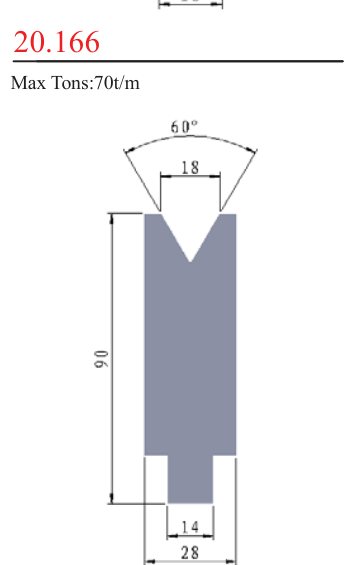
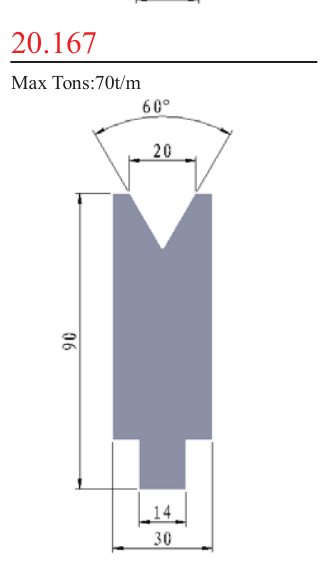
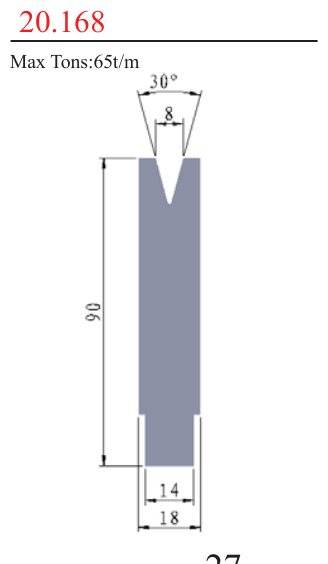
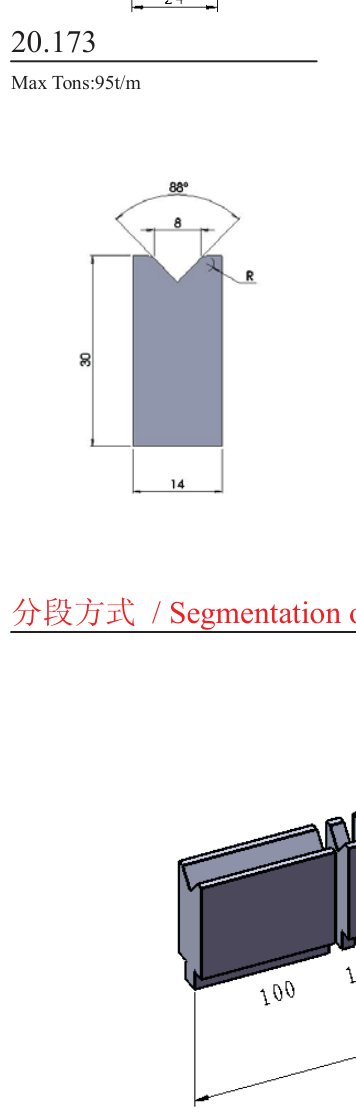
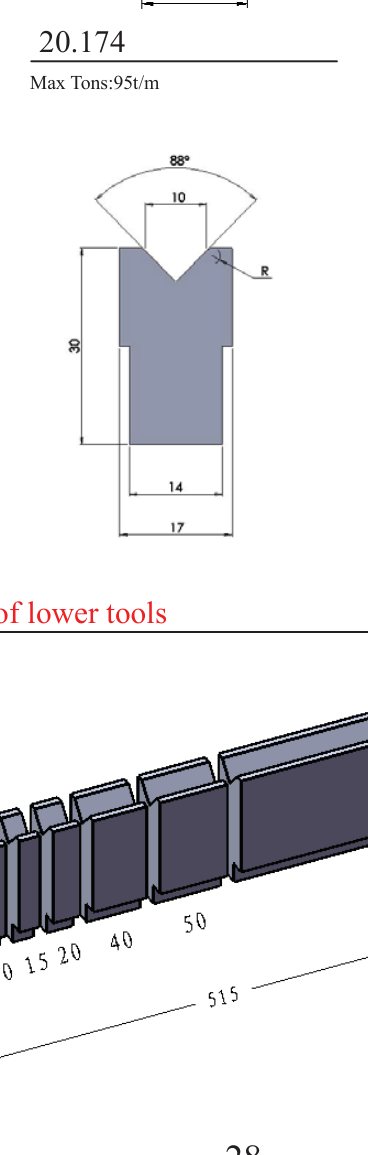
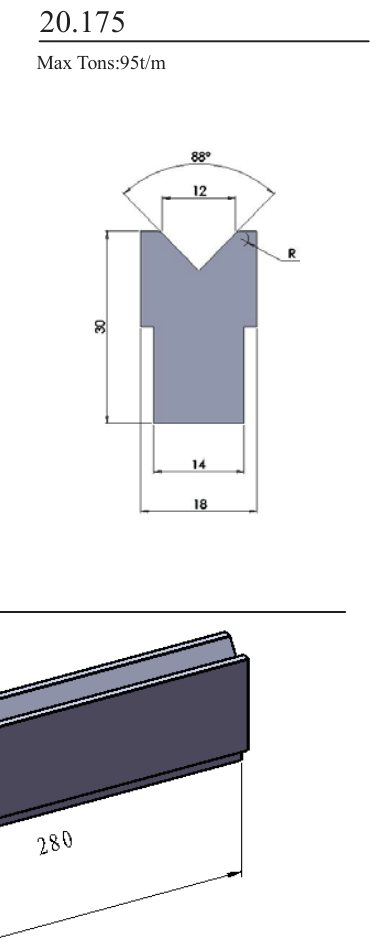
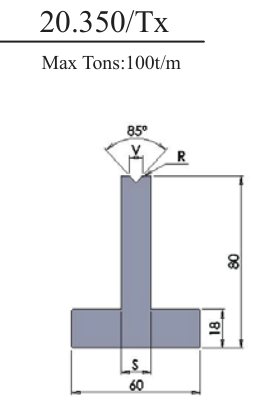
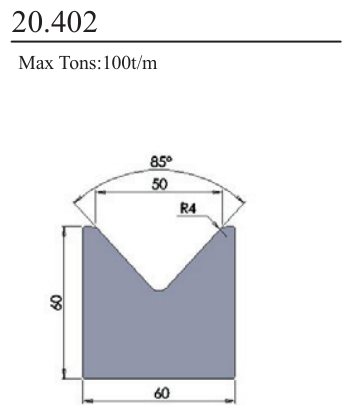
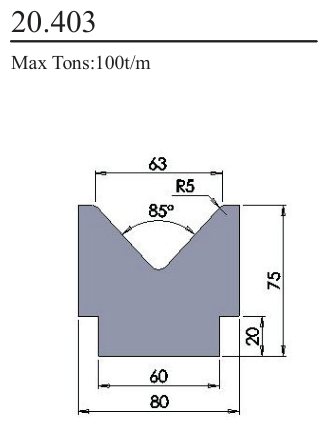
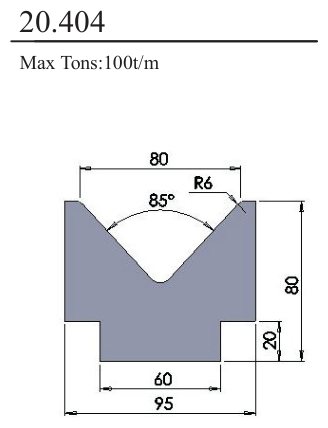
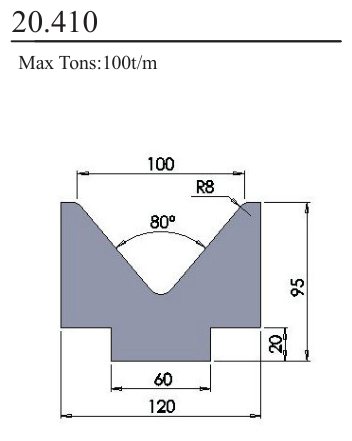
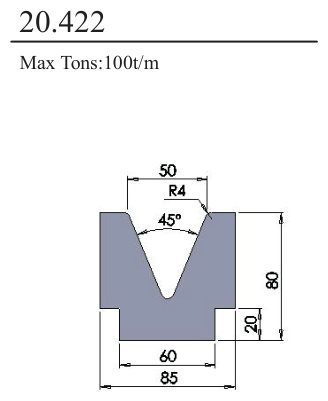
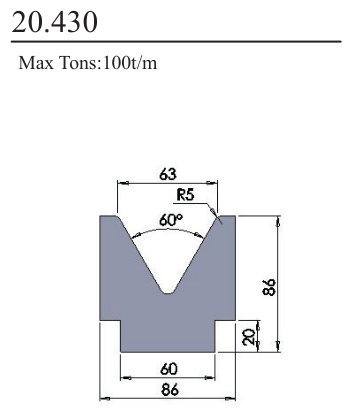
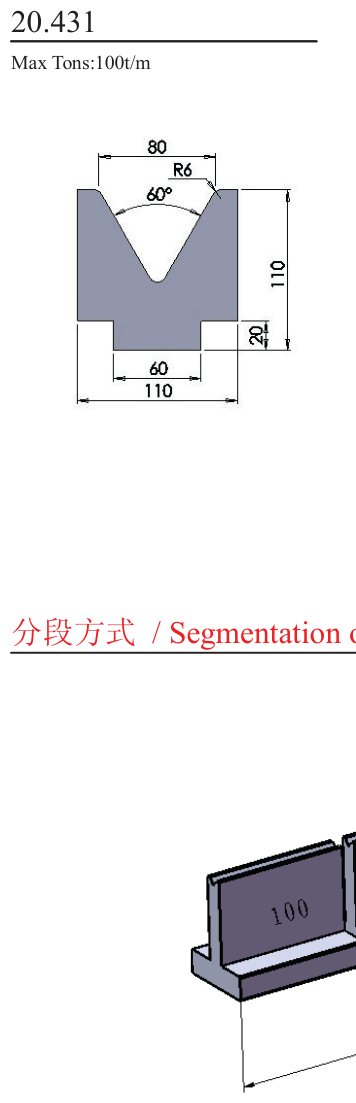
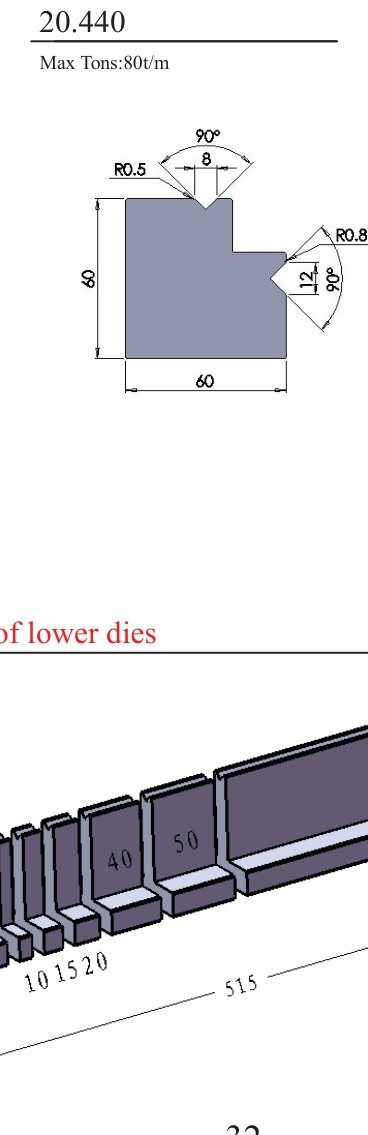
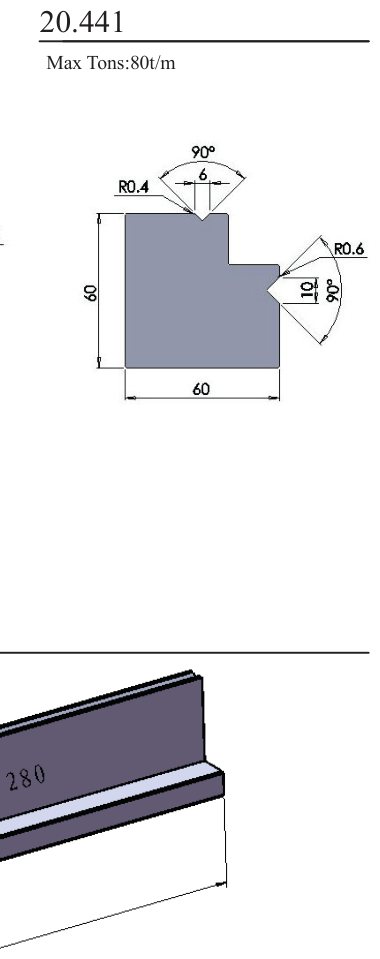
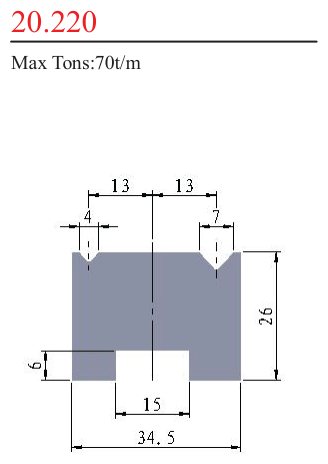
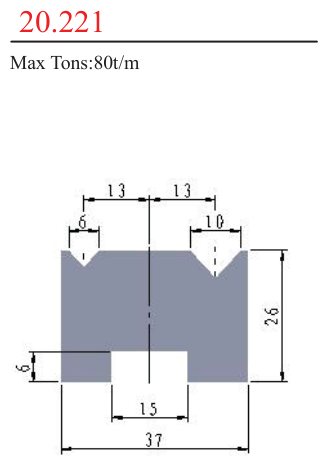
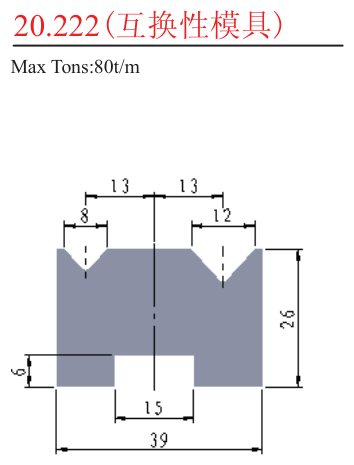
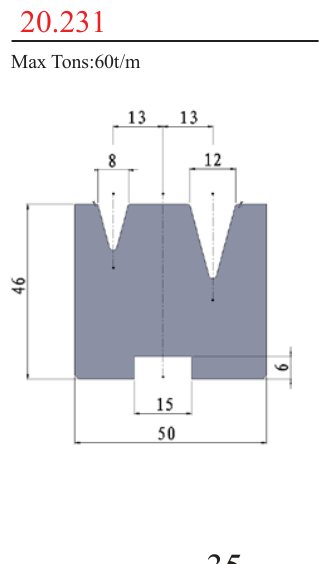
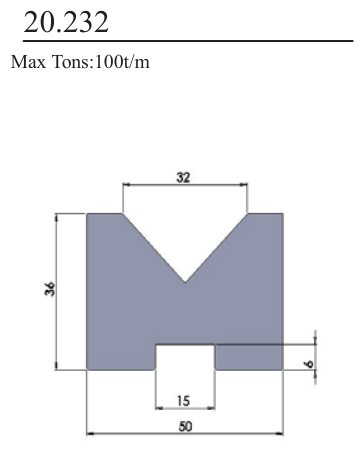
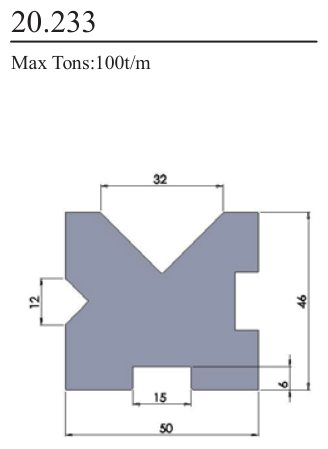
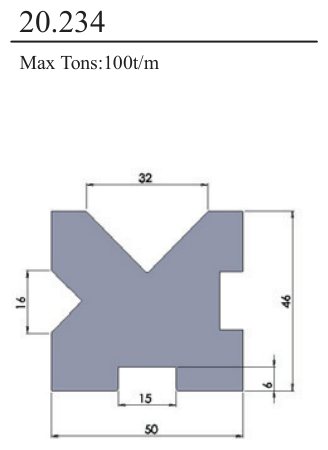
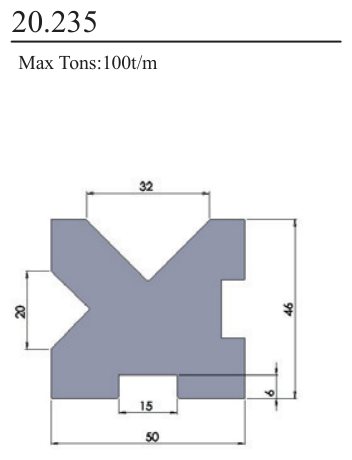
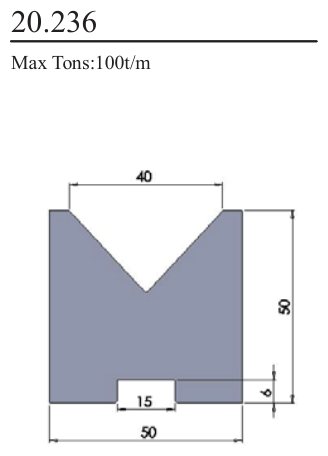
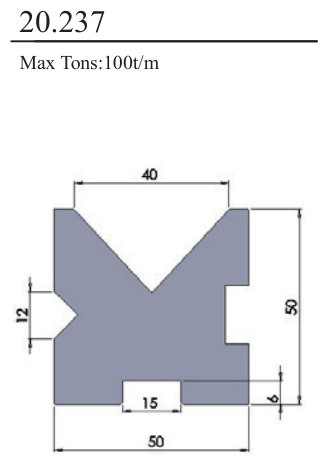
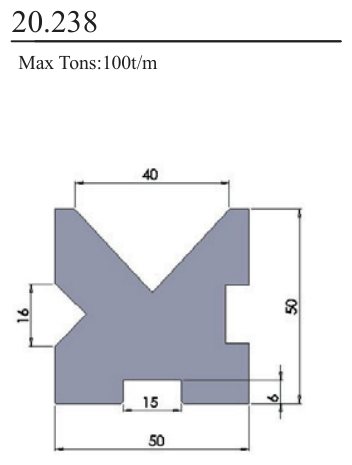
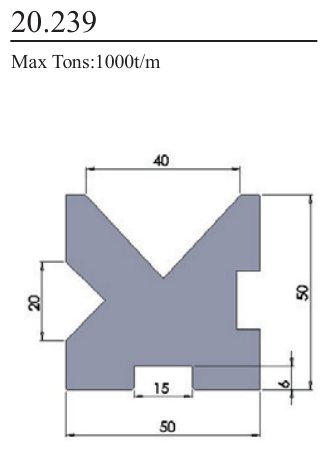
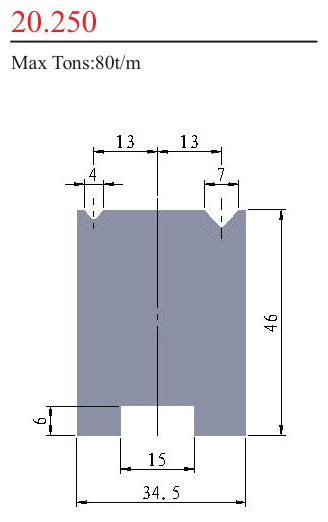
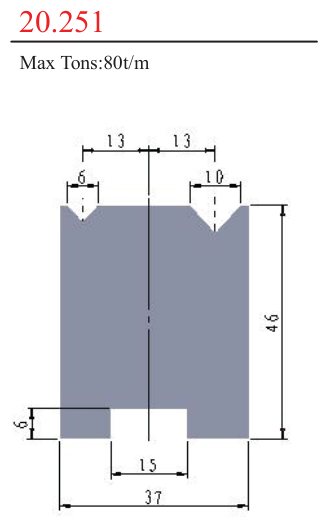
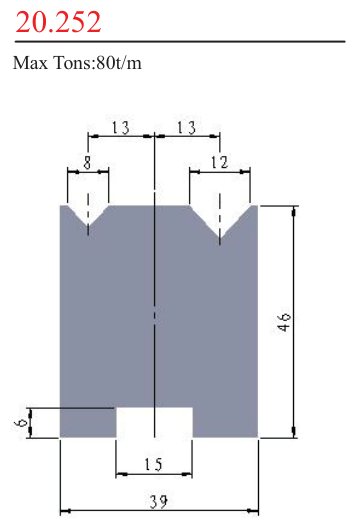
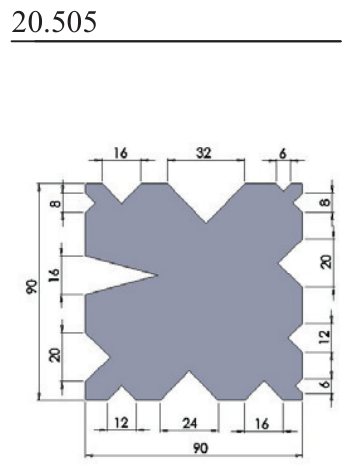
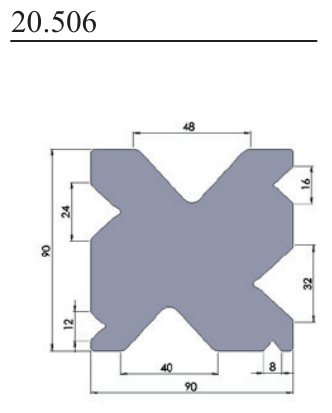
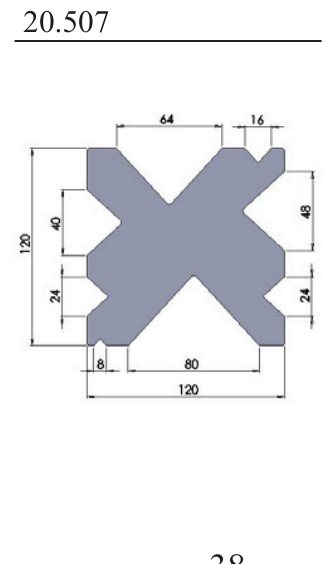
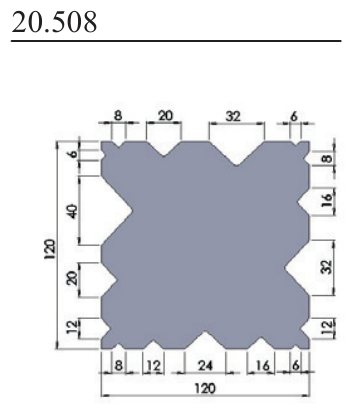
Lower dies, V6 to V260
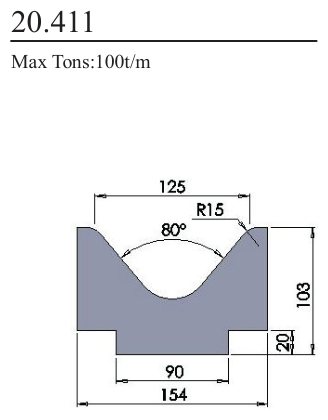
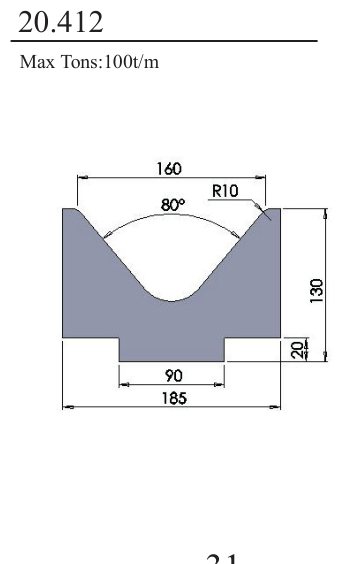
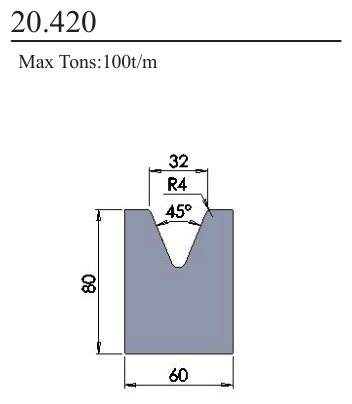
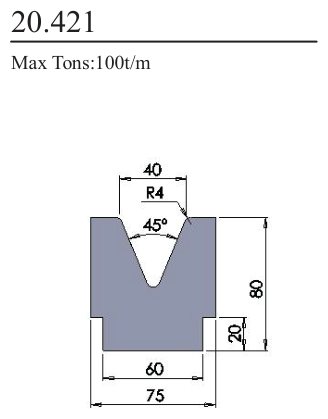
Single- and multi-vee dies precision-ground in 42CrMo, hardened to 55±2 HRC with radiused, polished shoulders for mark-reduced bending. Choose the V-opening from the capacity chart, or send your material and thickness and we'll specify it.
The three numbers that define a die
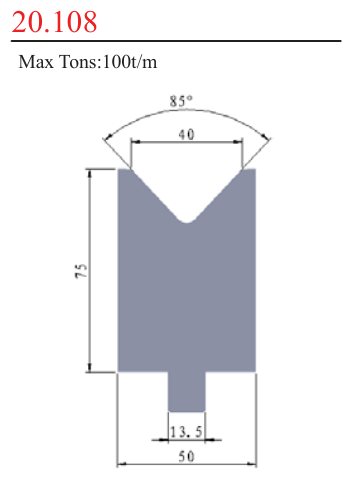
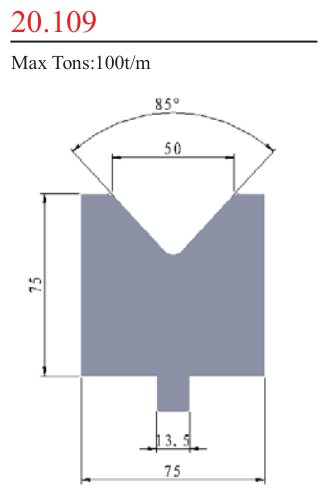
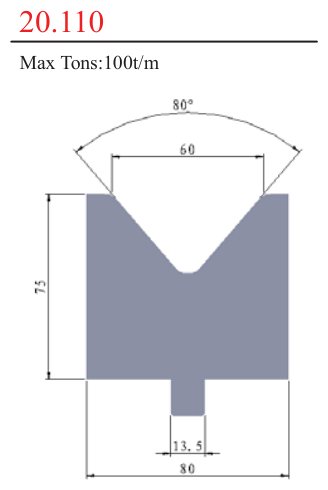
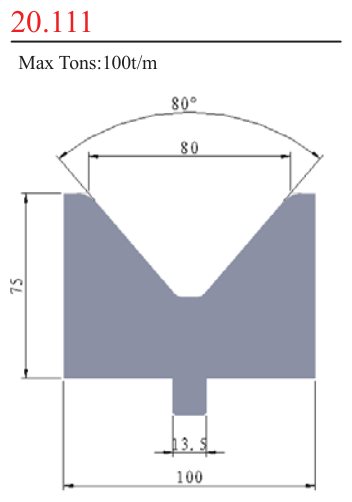
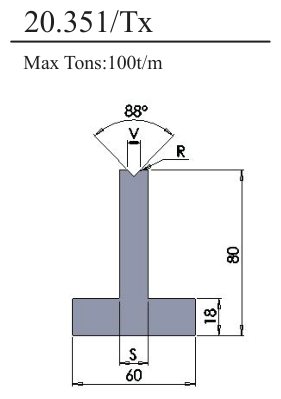
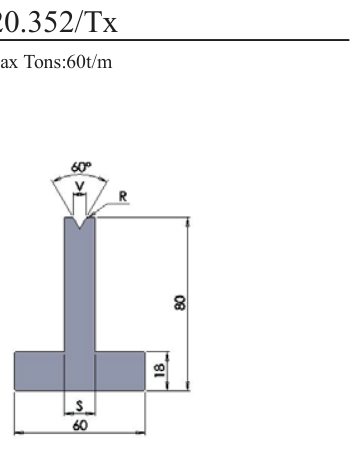
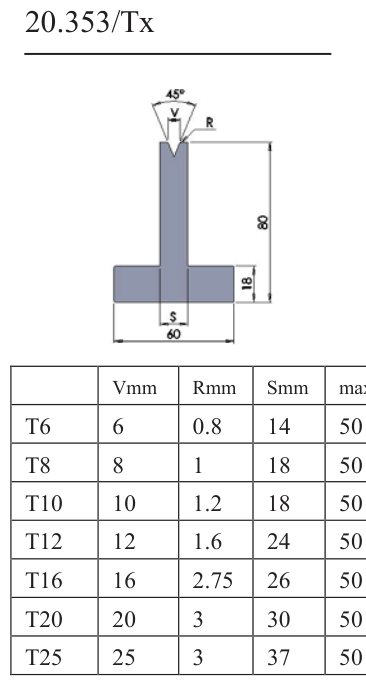
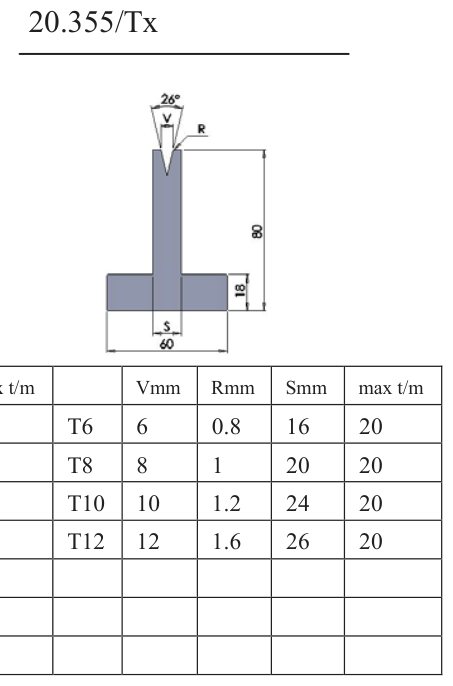
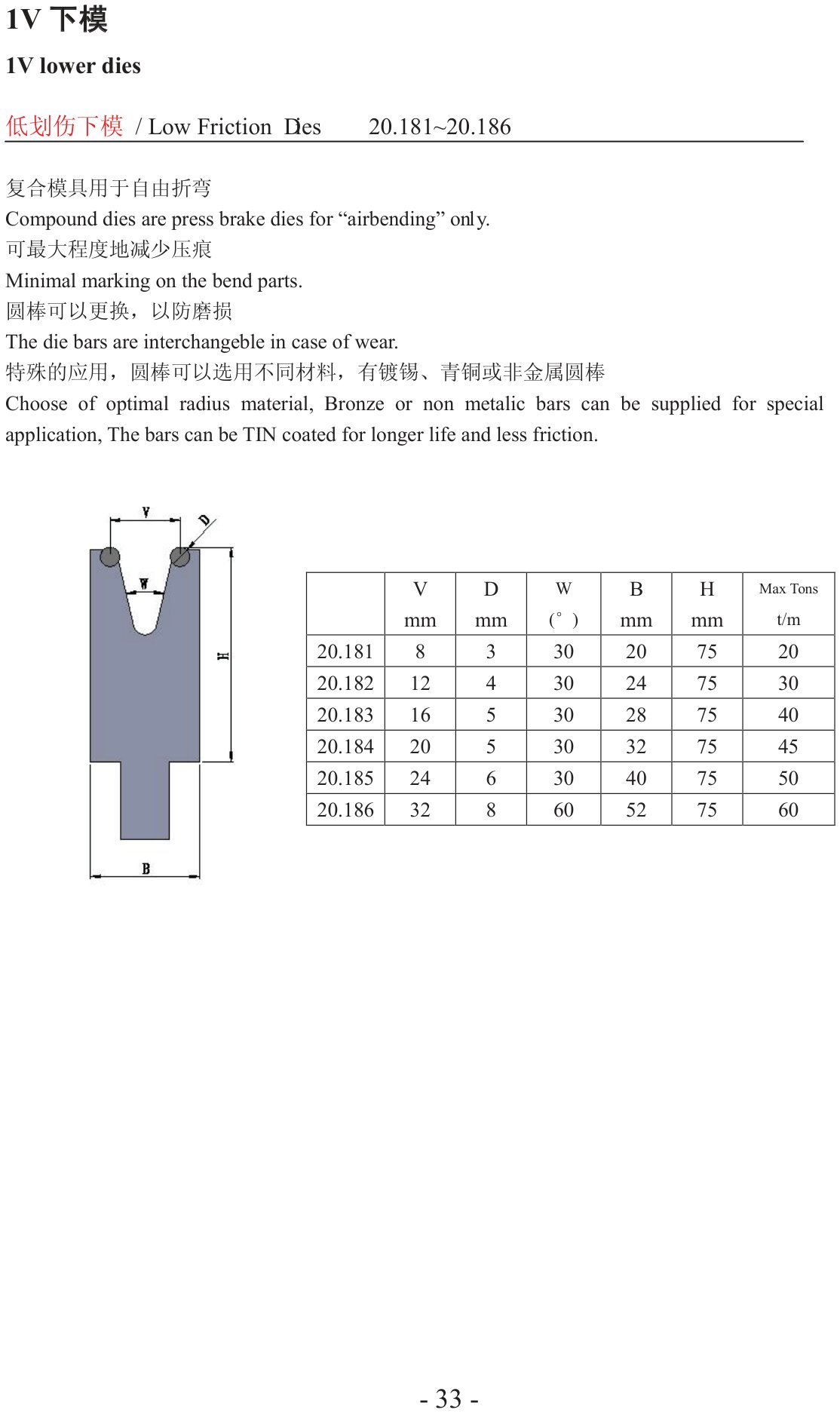
A lower die is defined by three things: the V-opening (which sets bend force and inside radius), the vee angle (90° or acute 88°), and the shoulder radius r. Rule of thumb for mild steel: V ≈ 6–8× thickness, inside radius ≈ 16% of the V. Send material and thickness — we return the exact die.
| Die type | V-openings | Vee angle | Best for |
|---|---|---|---|
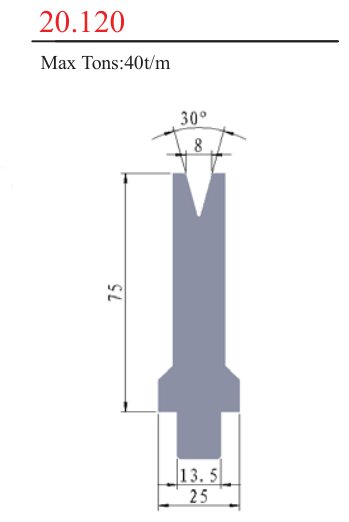
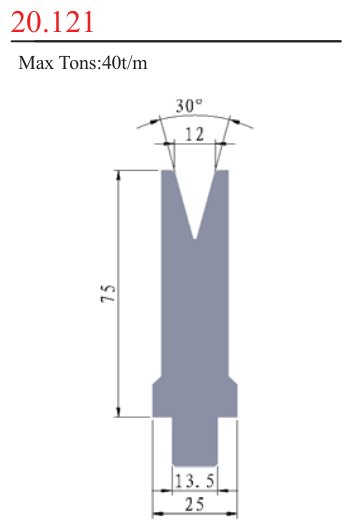
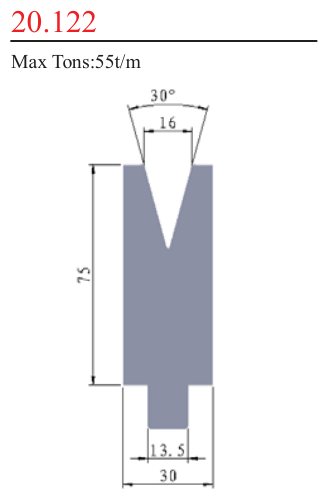
| 1V — Single Vee | V6 – V120 | 90° / 88° | Fixed-thickness production, one opening |
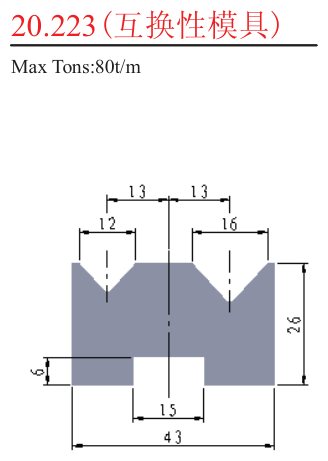
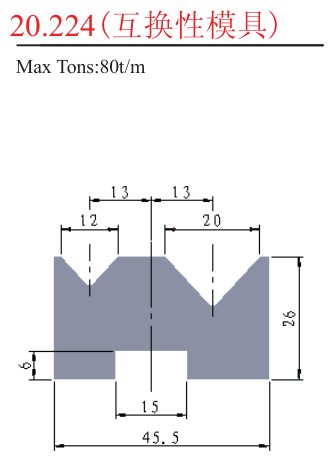
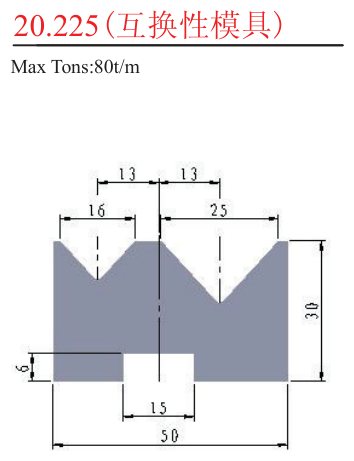
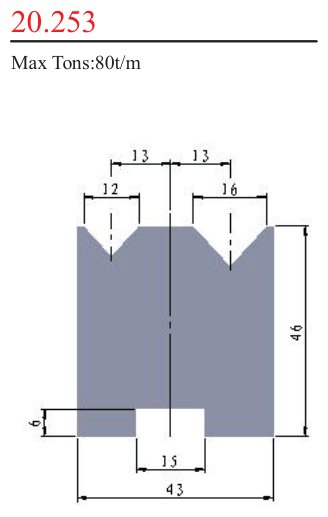
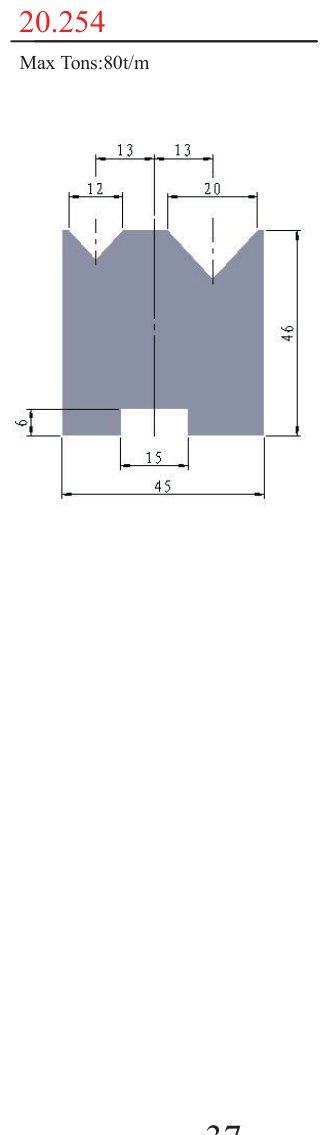
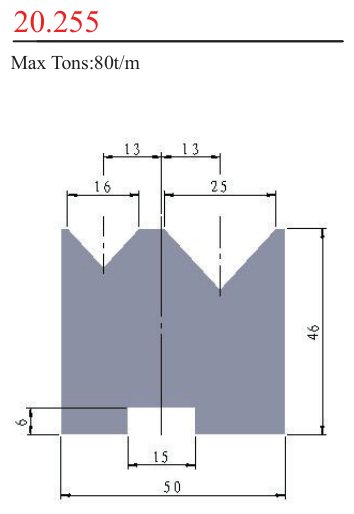
| 2V — Double Vee | V6 – V80 (pairs) | 90° | Two openings in one die, flip to switch |
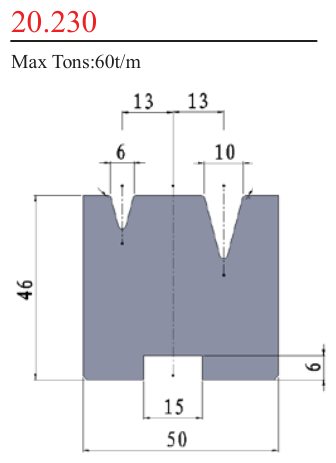
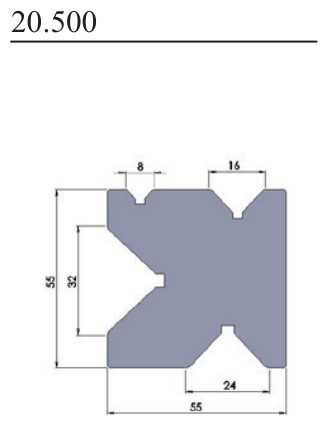
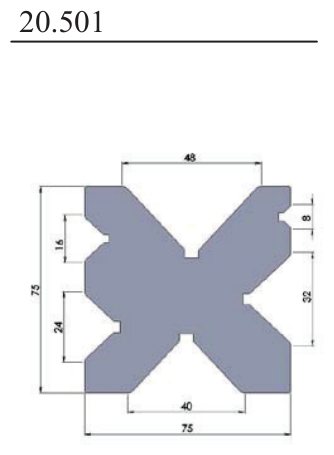
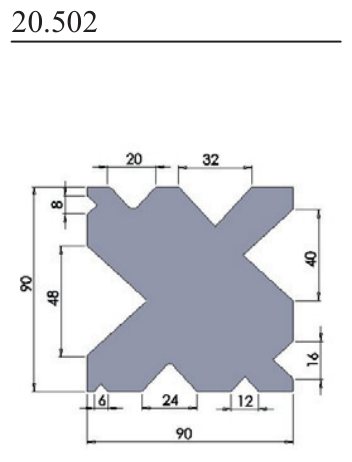
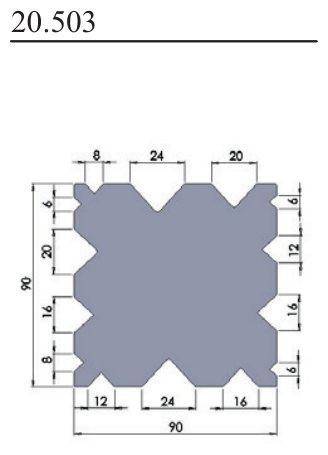
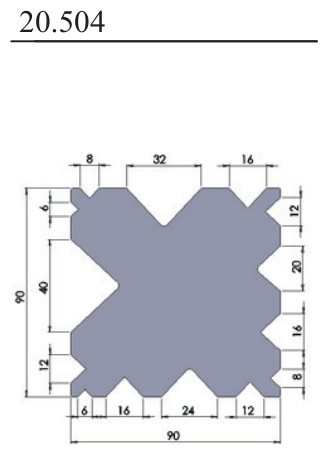
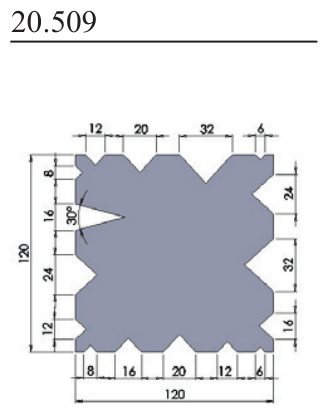
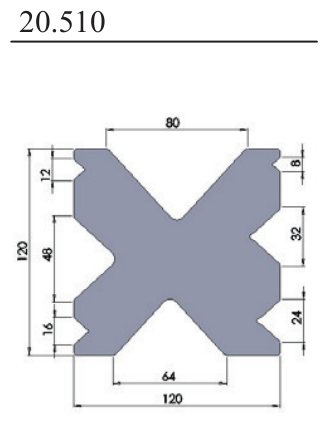
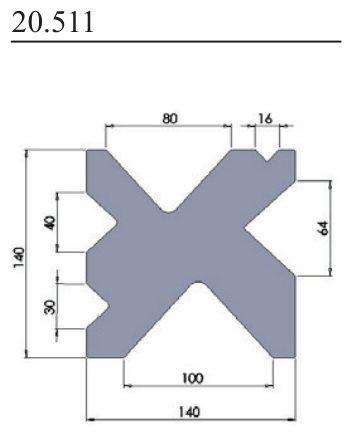
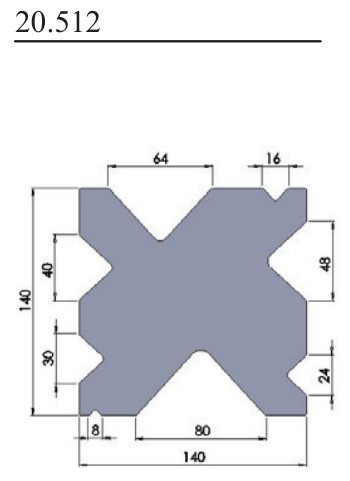
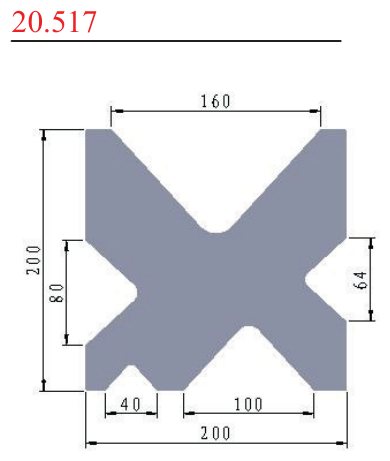
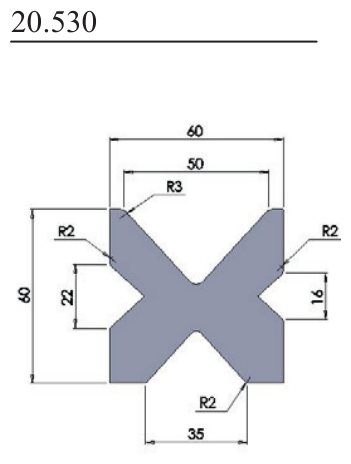
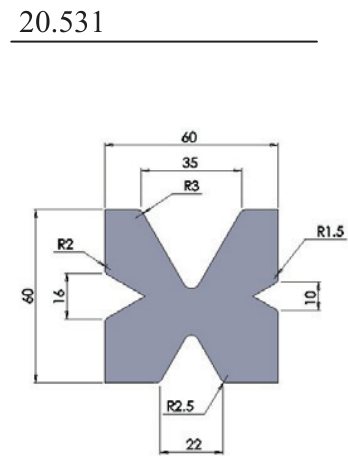
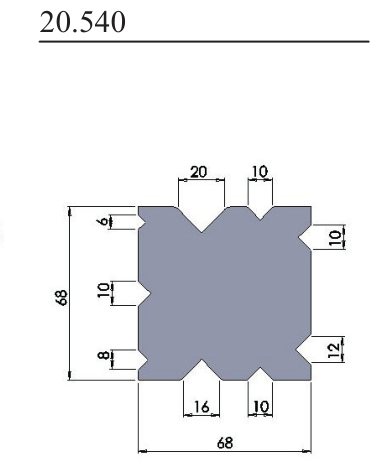
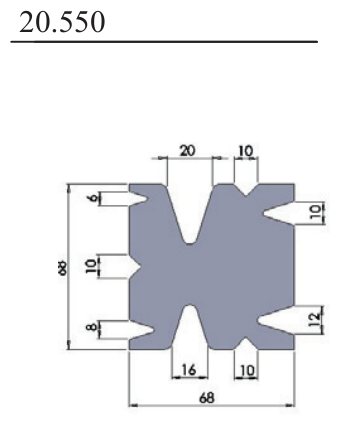
| Multi-V (4-way) | V10 – V60 | 90° | Four openings on one block, quick change |
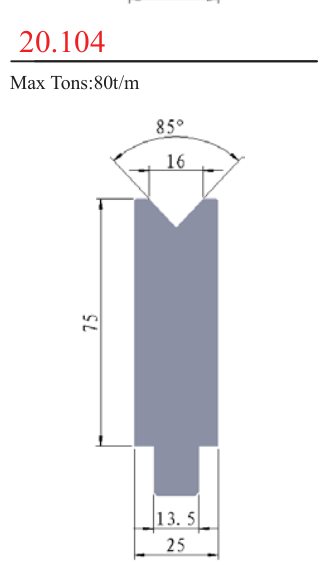
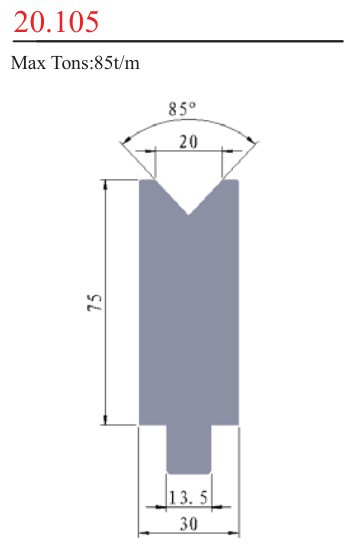
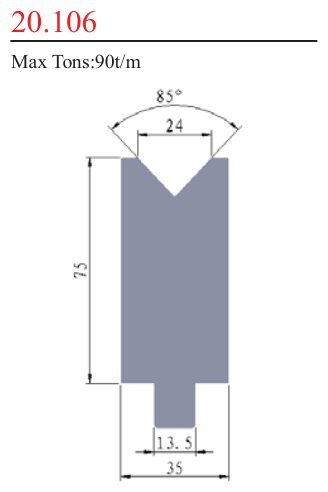
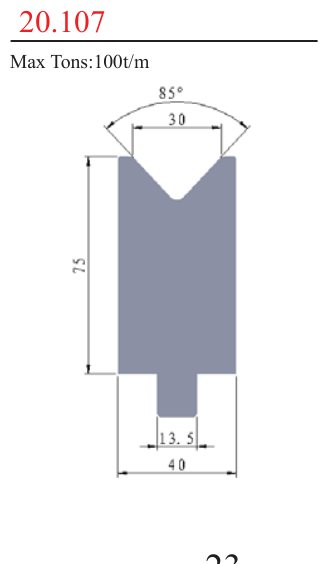
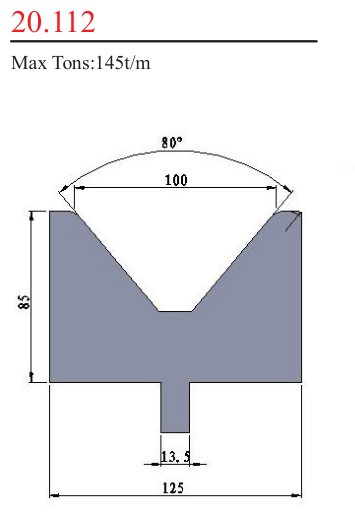
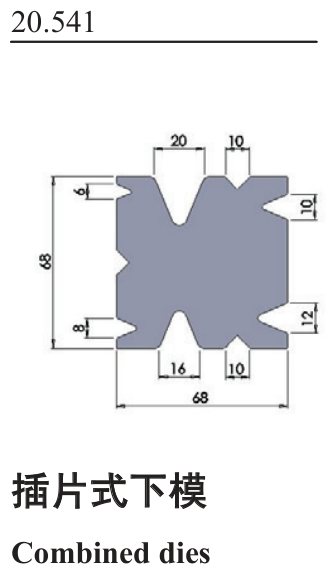
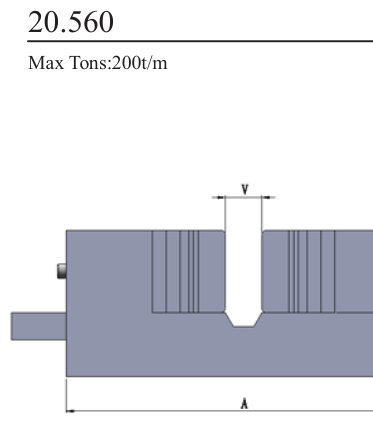
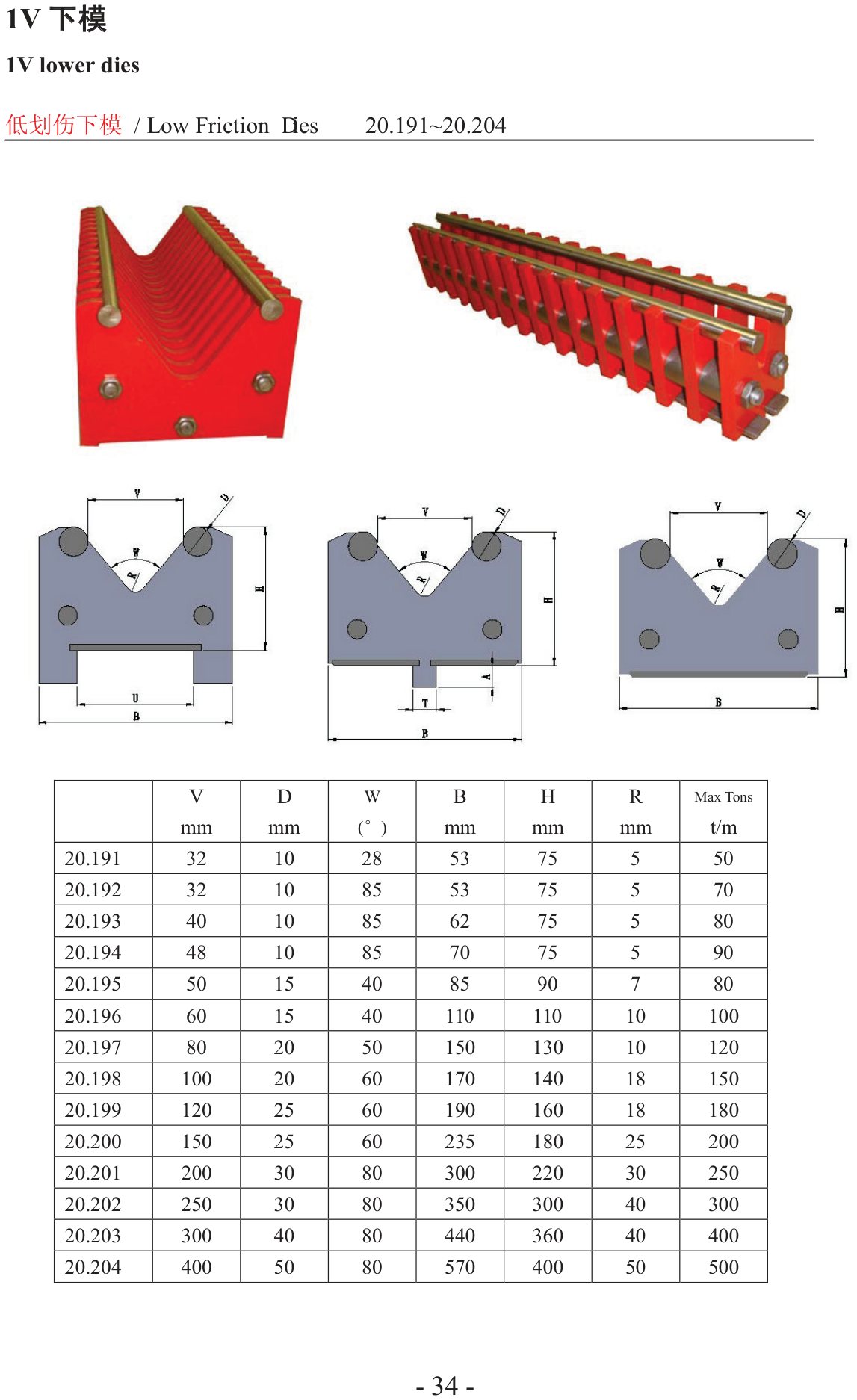
| Combined / Insert | V16 – V260 | 85–90° | Sectional inserts in a holder, wide range |
| Wide / Heavy V | V140 – V260 | 90° | Thick plate, high tonnage |
| Hemming / Flattening die | — | — | Closing hems with a flattening punch |
Rule of thumb: for mild steel, V-opening ≈ 6–8× material thickness; inside radius ≈ 16% of the V-opening. See the Air Bending Capacity Chart for exact tonnage and radius.
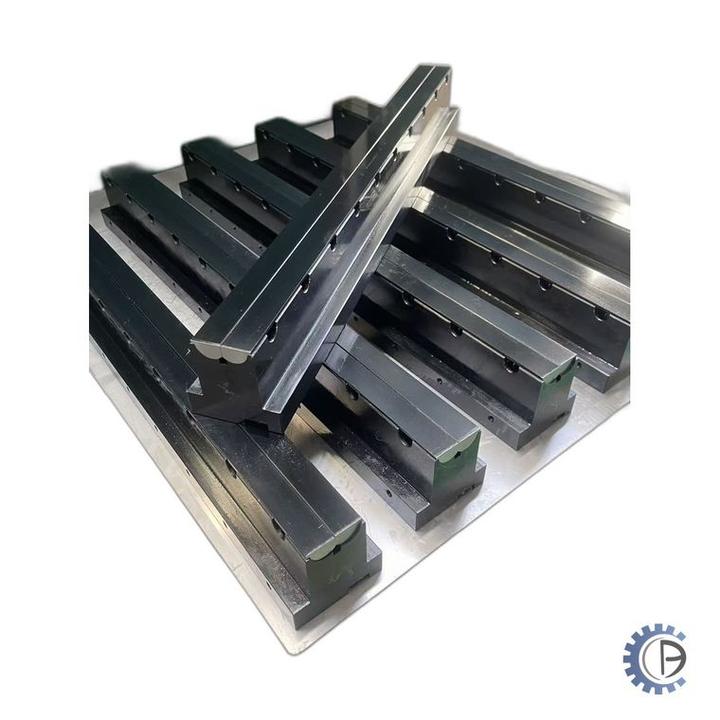
1V Single-Vee Dies
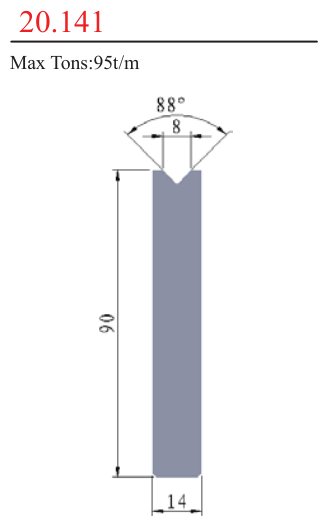
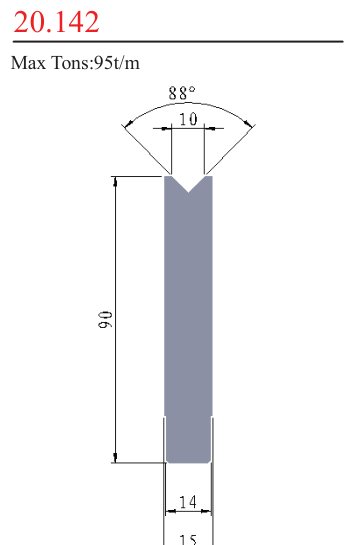
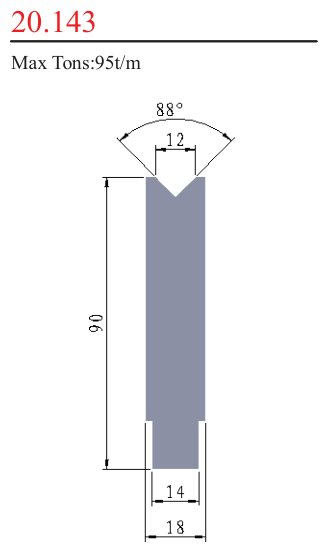
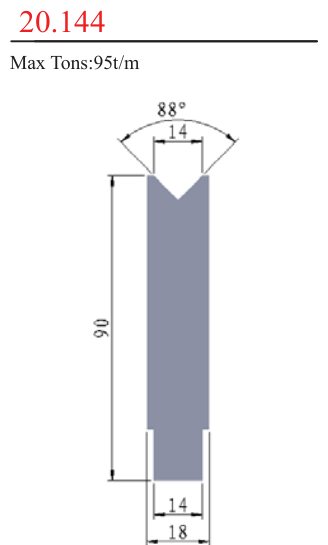
One precise opening, V6–V120, 88°/90°.
2V Double-Vee Dies
Two openings per die — flip to change vee.
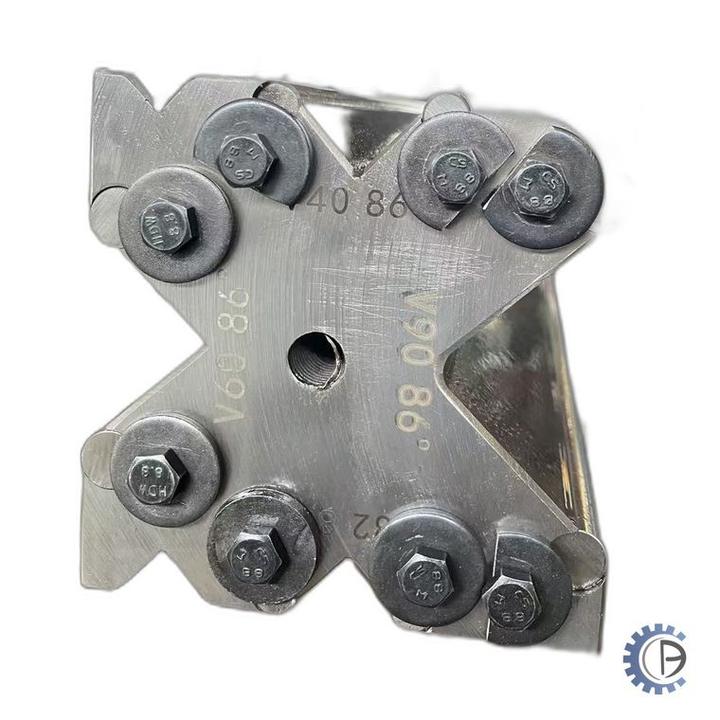
Multi-V Dies
Four openings on one block for fast changeover.
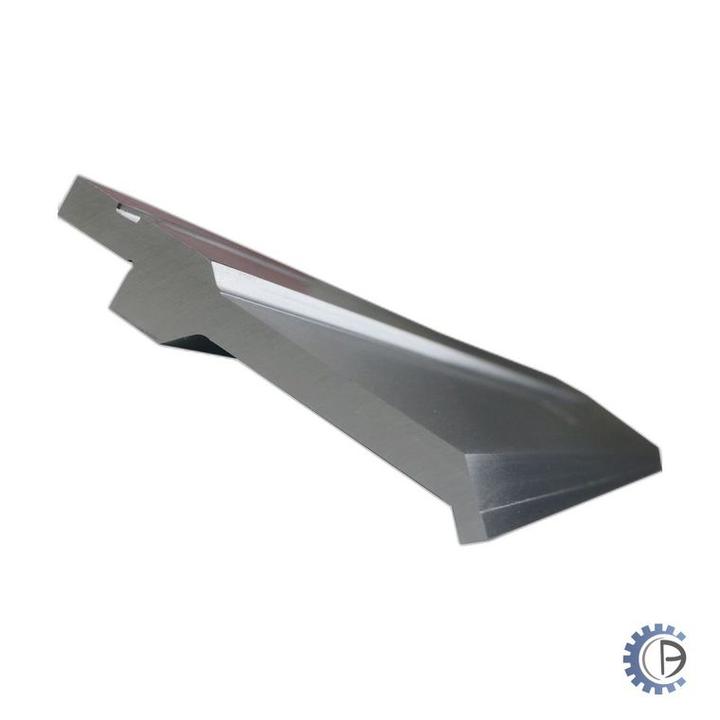
Combined / Insert Dies
Sectional inserts in a holder, V16–V260.
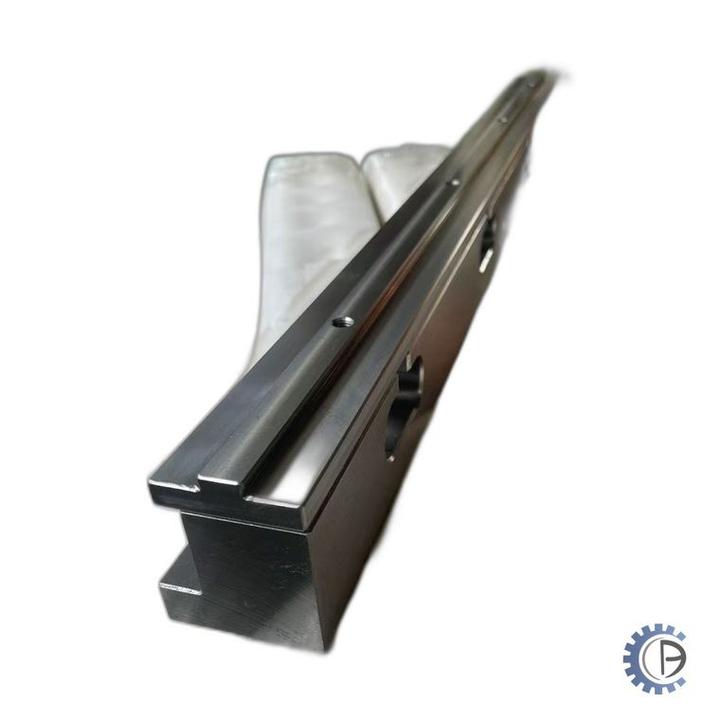
Wide / Heavy Dies
For thick plate and high-tonnage forming.
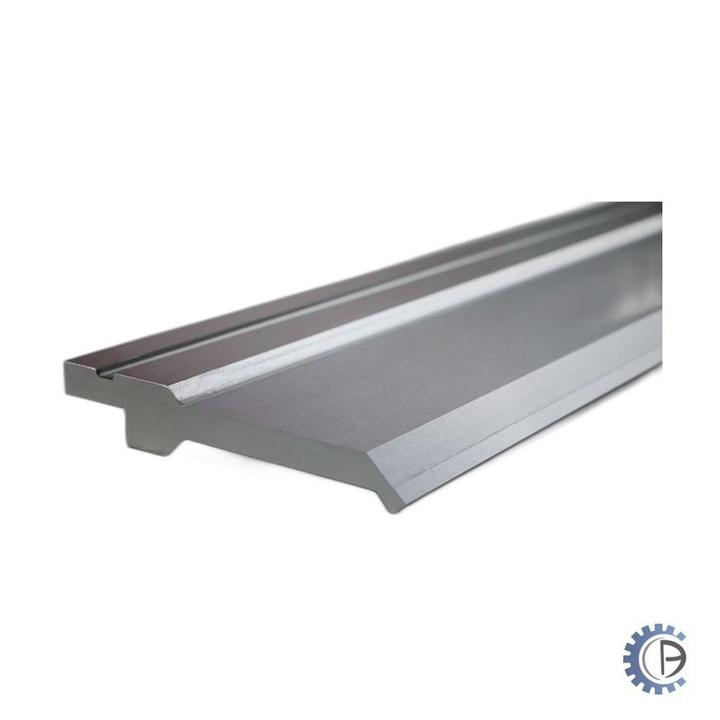
Hemming Dies
Spring-loaded and fixed flattening dies.